How Kids Discover Builds Accessibility Into Every Experience
- February 11, 2026
- By Katie Kennedy
At Kids Discover, accessibility is not something we treat as an add-on or a final step. It is a core part of how we design, develop, and improve our platform. Every update we make is guided by a commitment to creating a learning experience where all students can engage with science and social studies content in meaningful, independent ways.
Classrooms today reflect a wide range of learning needs, reading abilities, and language backgrounds. With the passing of the ADA Act Title II regulations, accessibility is not optional for public school districts. It is a requirement. These regulations served as a spark for Kids Discover to go even deeper on accessibility in 2025. Going forward, this will also ensure that our product development continues to meet both legal standards and the real needs of educators and students.
Accessibility Standards and Compliance
Kids Discover Online is built to align with the Web Content Accessibility Guidelines (WCAG) 2.1 and 2.2 at the AA level. These guidelines help ensure digital content is perceivable, understandable, and robust for all users. In addition, we maintain a current Voluntary Product Accessibility Template (VPAT) that documents how our platform meets federal accessibility requirements.
We believe transparency matters. Educators and districts can explore our approach, standards, and documentation in more detail on our Accessibility Landing Page, where we share our Accessibility Statement and our 2025 VPAT.
Supporting Readers With Noah Text®
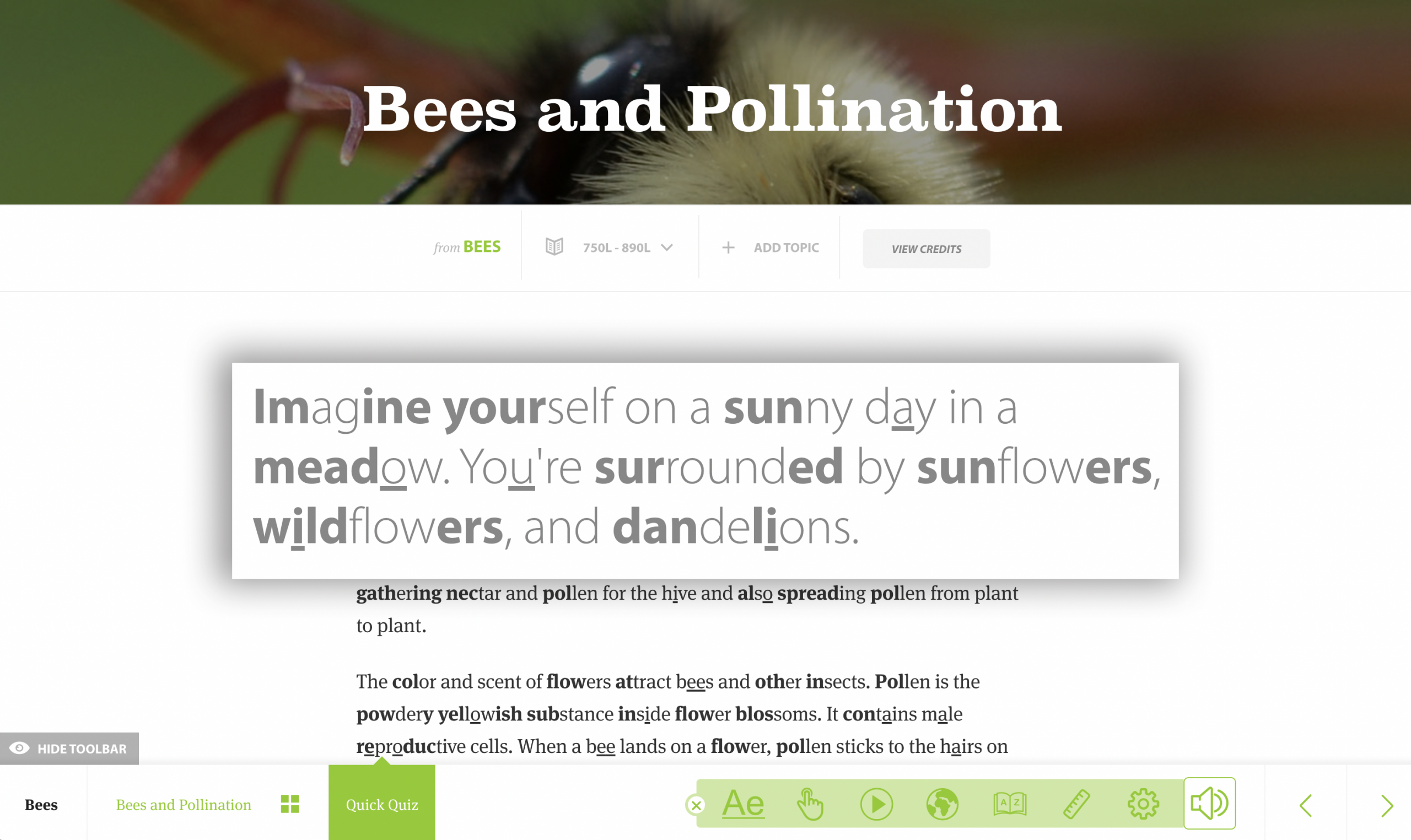
One of the most impactful accessibility tools available in Kids Discover Online is Noah Text®, our dyslexic-friendly markup system. Noah Text® improves readability by subtly highlighting syllables and word structure, helping students process text more efficiently and confidently. Because it is built directly into our articles and Units, students can activate it instantly without needing separate tools or accommodations.
Educators frequently share that Noah Text® gives striving readers the tools to engage more. Students are more willing to read independently, spend more time with the content, and participate in discussions. By making reading feel more approachable, Noah Text® supports reading comprehension while preserving student independence.
Bridging the Language Barrier with In-Line Spanish Translations
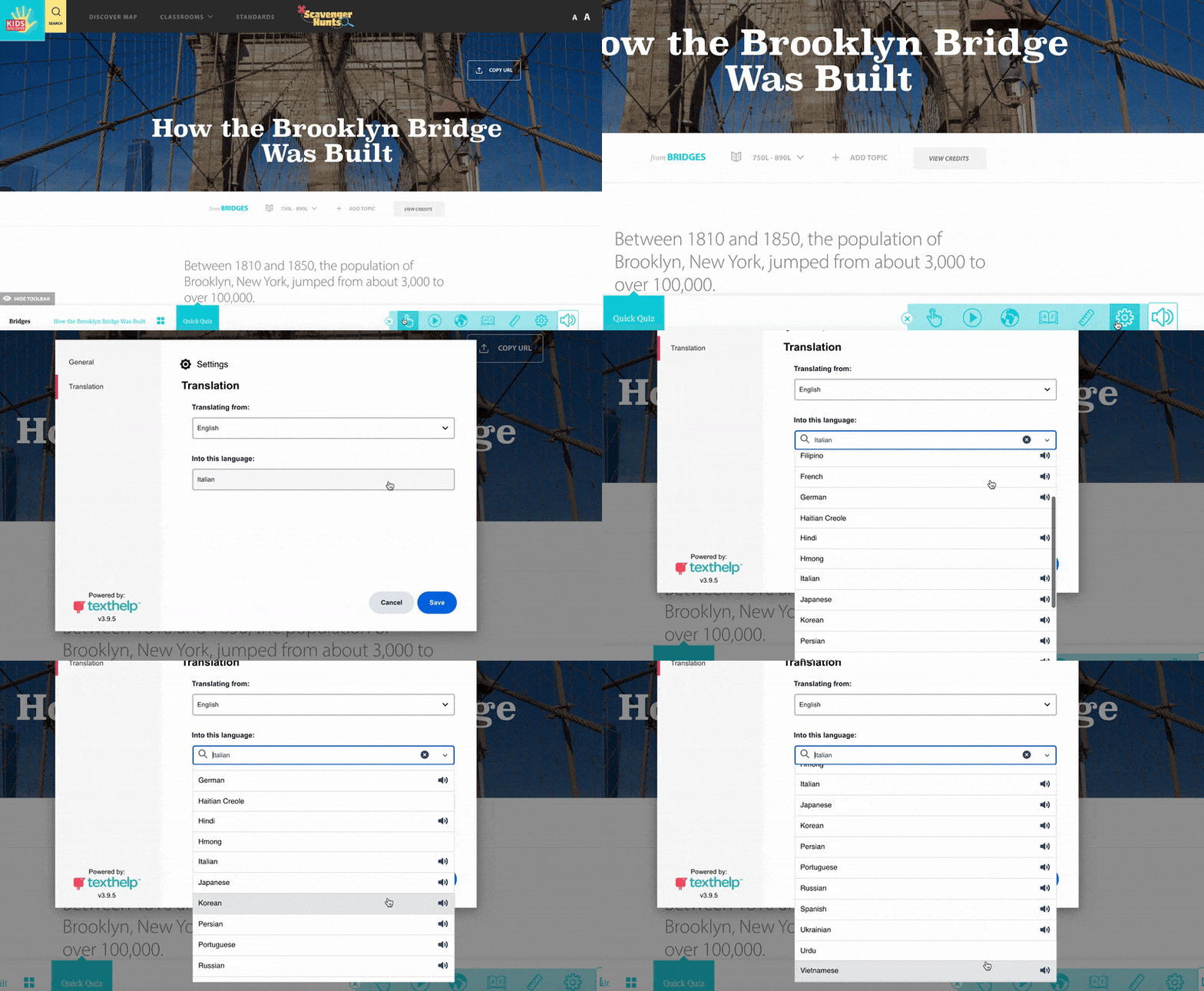
Language accessibility is another essential part of inclusive learning. Kids Discover Online offers a growing collection of 60+ Units featuring in-line Spanish translations that allow students to switch between English and Spanish with a single click. This is in addition to our automated Translation tool that is currently available in over 35 languages, most offering text-to-speech read aloud. These translations are built directly into the reading, allowing learners to move seamlessly between languages without leaving the article or losing context.
Both features support multilingual learners, bilingual classrooms, and students who benefit from reading in their home language. Teachers can confidently assign the same content to an entire class while knowing students have the flexibility to access it in the language that best supports their understanding.
A More Accessible Home Feed Experience
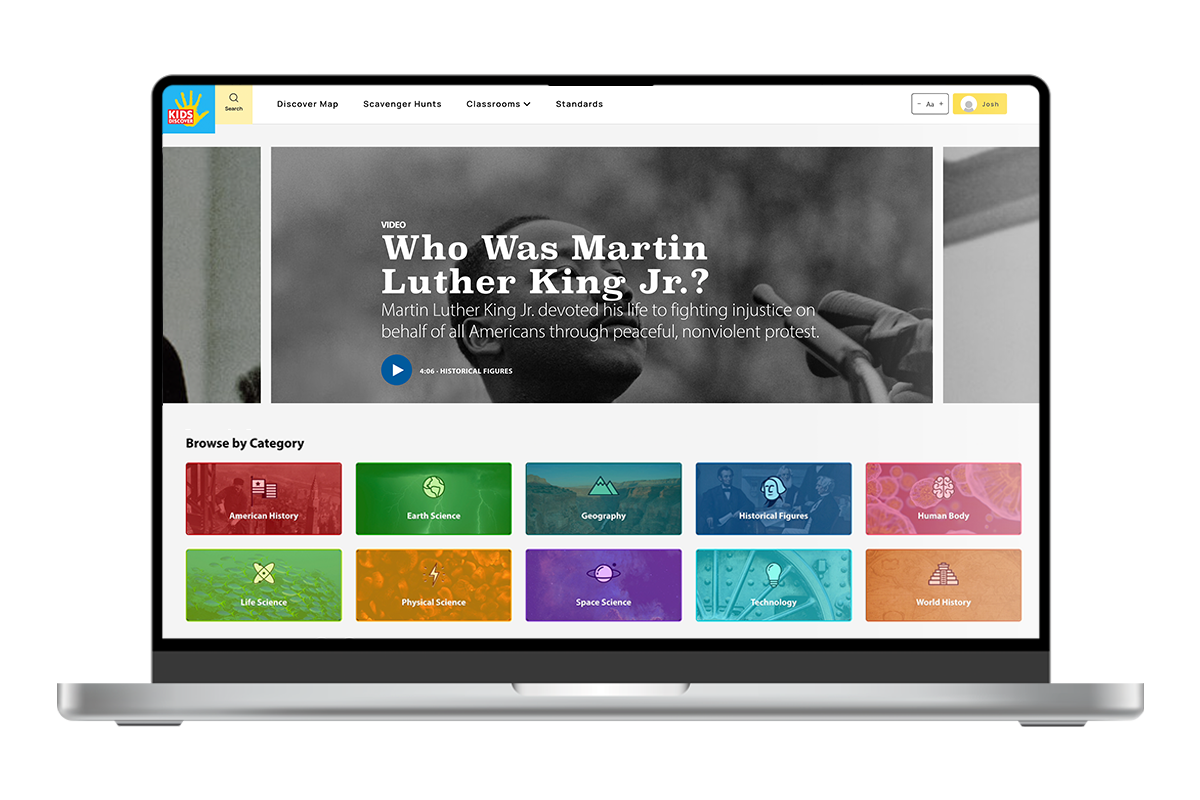
Accessibility extends beyond reading tools and language support. Recently, we introduced updates to the Kids Discover Online Home Feed to create a more intuitive and user-friendly experience. Featuring simplified navigation and a cleaner layout, the updated Home Feed helps students and educators find content more easily and with less frustration.
These improvements were informed by classroom feedback and real-world use. Students are now better able to explore independently, while educators spend less time troubleshooting navigation and more time focusing on instruction. The result is an interface that supports confidence, clarity, and curiosity.
Thoughtful Design Through Color and Contrast
Visual accessibility plays a significant role in how students interact with digital content. Over the past year, we have made targeted updates to color contrast and overall user experience to improve readability. These enhancements benefit students with visual impairments, attention challenges, and sensory sensitivities, while also improving usability for all learners.
Clear contrast and thoughtful design help students stay focused and comfortable during extended reading sessions. These changes reflect our belief that strong design should quietly support learning without becoming a distraction.
Improving accessibility is not a one-time initiative. It is an ongoing process that evolves alongside classroom needs and educational best practices. Every update we make is part of a larger effort to continually improve the product experience for both educators and students. By listening closely to feedback and observing how Kids Discover Online is used in real classrooms, we prioritize enhancements that make the greatest impact. Whether through translation features, navigation improvements, or visual design updates, our focus remains on creating a platform that works better for everyone.
Accessibility reflects our broader commitment to equity and inclusion in education. When students can access content confidently, they are more likely to engage deeply, ask questions, and take ownership of their learning. As Kids Discover continues to grow, accessibility will remain central to our product development decisions. Our goal is to ensure that every learner can access trusted, engaging content and that every educator feels supported by tools designed with intention and care.
More from the blog

Kids Discover Talks with NY1 Journalist Cheryl Wills About Historic Hidden Passageway on the Underground Railroad Found in New York City
- March 23, 2026

Kids Discover Talks with Good Housekeeping Parenting Editor Marisa LaScala about the Skills Ten-Year-Olds Can Master
- March 9, 2026