Kids Discover Talks with Author Shifa Saltagi Safadi About Her Amina Banana Book Series
- April 1, 2026
- By Alice Knisley Matthias
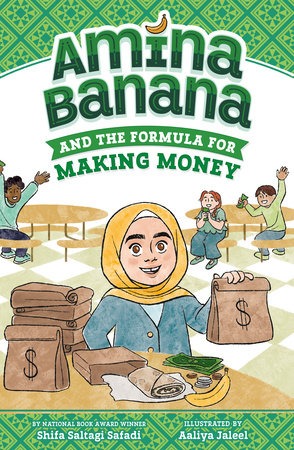
What was the inspiration for the AMINA BANANA books?
When I started writing Amina, it was because I was looking for a chapter book series with a
character who looked like me— and found none. I have long been a fan of chapter books, and love the
way they combine humor with heart, as well as adorable pictures and sassy characters into a series with
different fun plots kids can laugh over. So I began my foray into this genre…and Amina just pranced right
into my mind with her story ready, like she had been there waiting the whole time for me to be ready to
write her and share her with the world.
What can kids learn from reading about Amina?
AMINA BANANA has a lot of entry points for young readers. There is the STEM (Science, Technology, Engineering, Mathematics) aspect: Amina does a science experiment in each book, and it is one that ties in directly to the plot of the book. There are also lots of SEL (Social Emotional Learning) moments in each story, Amina is a Syrian refugee learning to navigate her new home in America, and so the books explore friendship, kindness, confidence, financial literacy, and working with frenemies. It’s also a female-led chapter book series with an Arab Muslim girl being a girl boss, and I just think that is the coolest rep for kids to see!
How do you work with an illustrator to put a book together?
In traditional publishing, typically, the author and illustrator have little contact except through the editor and art designer, who share the document and a few notes at times. This is to make sure that each feels like a full partner in the creation of the work, and not that the author is directing the illustrator. AMINA truly wouldn’t be who she is without Aaliya’s brilliant creative art and work on this series. I love each time I see the sketches come in from my editor, and Aaliya always amazes me with how she infuses personality and goofy humor into the AMINA books.
How do you decide what is a book and what is a series?
When I first start plotting out a book, even before I begin to draft, I have a VERY specific vision of what I want that book to be. Picture books differ in terms of voice and plot from Chapter books, with the former being shorter and a little more concise to try to fit into 32 or 40 pages, whereas chapter books give me room to explore more dialogue and scenes and require a full plot with subplots and emotional threads. Middle grade is also a bit different, because the voice requires a bit more maturity and a tiny teeny bit of angst, although all these genres have a special fun kid way of looking at the world in them that makes me enjoy creating them so much.
What can readers learn about different cultures from reading books?
I think mainly I just want to normalize being a Syrian American Muslim like myself to readers. This is just a story of a little girl who is living her life and making mistakes and having silly moments with her friends, and yes, you do get a little window into her life of being Syrian and Muslim in her language, her food, and her mannerisms— but most of all, I hope readers realize that we all are connected through our humanity, and draw upon the similarities that they can feel with a character who might look different than them.
What do you think about making a movie from a book?
Haha! This is actually a difficult question. Honestly, this might be strange, but I don’t know that I ever want my books to become movies. I am totally team “books-are-better-than-movies,” and I am often frustrated with my favorite books being adapted into a movie, because all I can see are the ways they turn out differently! I also am a craft-focused person, and part of me feels like some stories are written for cinema, with lots of imagery and scene-based plotting, whereas in stories, you have a lot than can be more subtle in terms of pacing—which might not translate to the same experience if turned into a movie.
How did you get started writing?
I have loved writing since I was 9-years-old, and I still have a binder of my old short stories and poems that I jotted down. I didn’t however start pursuing publication until 2019, and I think it is because that is the moment when I saw Muslim books make it on bookshelves. And that is the moment I realized my dream of being an author was possible.
Who was a favorite author for you as a kid?
DEFINITELY Lemony Snicket. I was obsessed with the books! And also Katherine Applegate. Her animorphs series is the best!
What was your favorite book as a young reader?
The Nancy Drew series. I remember my shelf with the yellow spines of the books!
What subjects interested you in school?
I loved English class a lot starting in middle school, and it was because I had become addicted to reading. I ended up majoring in English literature in college and now writing and reading English is taking over my whole life! I did not like science! Or Math! Although my character Amina is my opposite.
What is a piece of advice or words of encouragement you got from a teacher or mentor?
I was always complimented on my writing by multiple educators growing up and told I should become an author. That did stay with me!
How can kids get excited about reading?
I think kids just need to find the right book. Each of my four kids has such different tastes, and I love that there are so many ways to be a reader nowadays whether the usual prose form, or through audio, through ebooks, or through graphic novels and verse novels. Keep searching until the reader finds something they cannot stop turning pages of.
Who is someone from the past, or present time, you would like to have a conversation with?
I would love to speak with Langston Hughes. His poems make my whole heart feel all the emotions, and I want to sit and learn from his mastery of language!
What do you hope readers take away from your books?
I hope readers learn empathy and compassion from Amina— and also just laugh out loud at her sassy personality and funny mess ups. And maybe also tear up. Amina is a sweet character that tugs at the heart strings, and each book really does feel like an emotional arc for me as I was writing it.
What are you reading right now?
I am reading WEAVINGSHAW by Heba Al-Wasity!
What’s coming up next for you?
Next up for me is AMINA BANANA AND THE FORMULA FOR FAIRNESS in May of 2026, the fourth book in the series. I also have my second middle grade novel in verse, SISTERS ALONE, in September 2026. And in January 2027 I have a picture book titled THE KAABAH CAT that I am so excited to share with the world!
Alas, also some secrets that I must hold onto for now. But look out for more fun announcements soon!
What is Za’atar?
Chef and cookbook author Suzy Karadsheh is the founder of The Mediterranean Dish and she tells us about this popular spice used in dishes.
“Za’atar (pronounced Zaah-tar) is most identified with Middle Eastern and Mediterranean cooking,” says Karadsheh. “A combination of herbs, sesame seeds, sumac, and salt, it is one of the world’s unique and best seasonings. It’s loaded with bold flavors, has great texture, and even boasts some health benefits–from soothing inflammation to boosting cognition!”
“Many don’t know this, but the Arabic word Za’atar (zaatar) also describes an actual herb that’s in the wild thyme family which starts its life looking more like oregano. Spice blends that stick to the traditional taste will include Mediterranean wild thyme in them.”
Amina’s Recipe for Za’atar Sandwiches
Ingredients
1 pita bread (or any flatbread)
1–2 tbsp Za’atar spice mix
1–2 tbsp extra-virgin olive-oil
- Open pita bread and place one half face up on the counter.
- Mix the Za’atar mix with the extra-virgin olive-oil. Mix until combined.
- Spread onto the open pita.
- Wrap the sandwich like a roll.
Add-ins: You can eat your Za’atar sandwich with sliced and pitted kalamata olives, sliced cucumbers, fresh mint, and sliced tomatoes.
.