Kids Discover Talks with Authors Diane Debrovner and Stacy Cervenka About Their New Book, Roxie in Color
- June 3, 2026
- By Alice Knisley Matthias
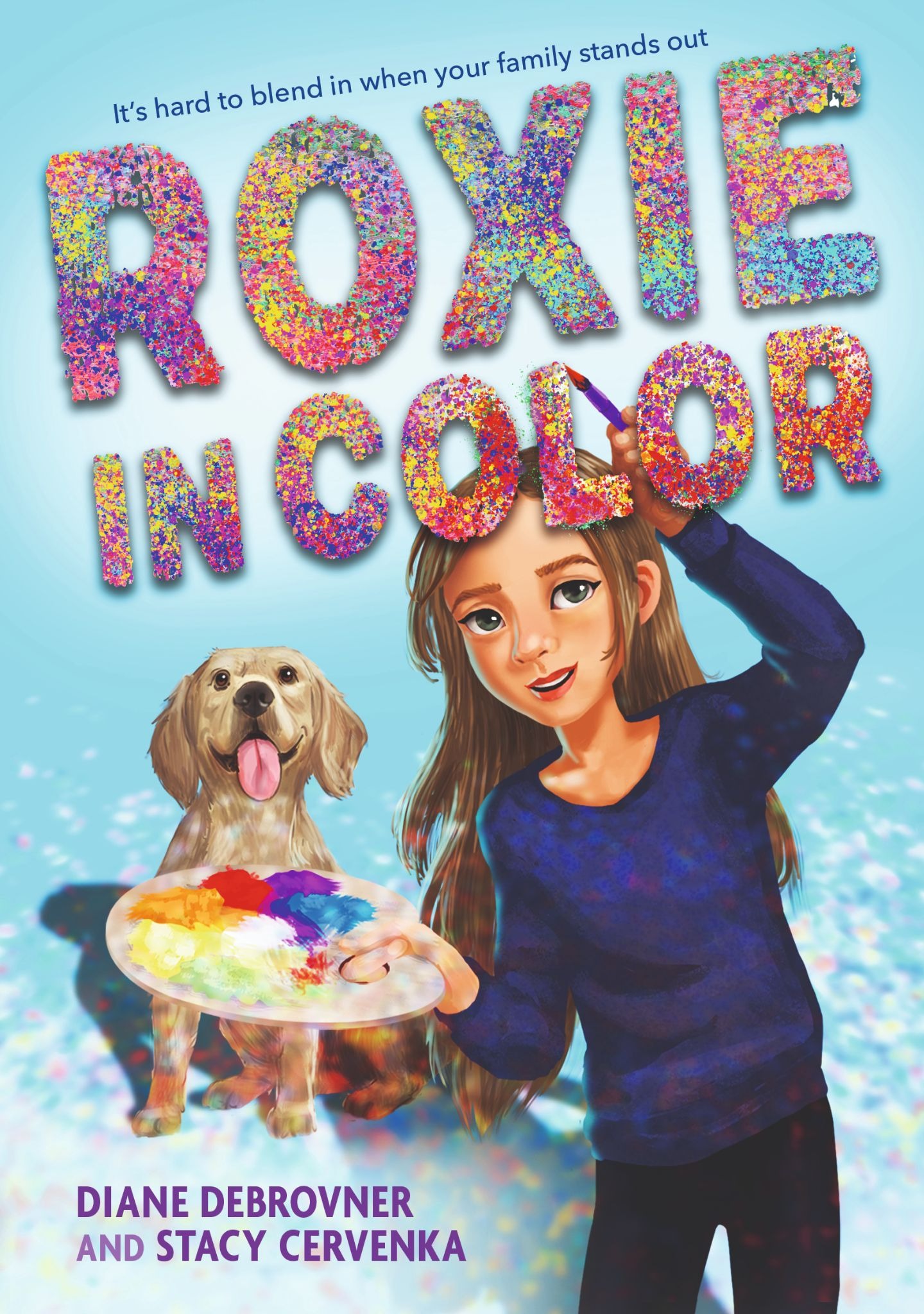
Candlewick, June 2, 2026. “Roxie wants to blend in at a new school, which is hard to do when your parents are blind, in this remarkable novel about friendship, misperceptions, and family—plus a dog’s view of the world.”
Diane Debrovner, a former editor of Parents, and Stacy Cervenka, Director of the Iowa Department for the Blind, met when Debrovner wrote an article called “What Blind Parents Want You to See” featuring Cervenka and her husband. The conversations became the idea for the book Roxie in Color about a young girl whose parents are blind and the dynamics of their family with different capabilities.
“I started thinking about what it would be like to be a 12-year-old whose parents are blind,” says Debrovner, “and came up with the idea for this book.”
We also get a glimpse of the life of a hard-working guide dog from the point of view of Roxie’s beloved dog, Nash.
“He can describe important things that happen in the story when Roxie isn’t there,” says Debrovner.
Kids Discover got a chance to speak with the two authors of Roxie in Color and what they want readers to learn from the characters.
“I hope kids come away talking about how exhausting and isolating it can be to hide the many parts of ourselves that make us who we are,” says Cervenka. “Roxie’s story helps kids understand that people move through the world differently from one another, but we all want friendship, understanding, respect, and to be given the benefit of the doubt.”
What was the inspiration for the Roxie in Color book?
Diane: I wrote a magazine article about blind parents and Stacy was one of the parents I interviewed. All of the parents I interviewed told me stories about being treated unfairly sometimes because of their blindness. I learned a lot about how blind parents do certain things differently than sighted parents, and I also learned about guide dogs. I started thinking about what it would be like to be a 12-year- old whose parents are blind, and came up with the idea for this book. Then I asked Stacy if she wanted to write the book with me. Just like the family in the book, she and her husband are blind and their two children are sighted.
Tell us about how a book is written with two authors?
Diane: I live in New York City and Stacy lives in Lincoln, Nebraska, so we wrote the book using a shared Google document. We would work on different chapters and then trade them back and forth to make comments and suggestions. We color- coded our revisions so we could keep track of them. Stacy made hers in green and I made mine in purple. Stacy uses screen-reading software on her computer designed for people with vision loss that either says the words out loud or translates them into braille that she can read with her fingers.
What can kids learn from reading about Roxie and her family?
Stacy:
I hope that non-disabled kids come away with a better understanding that their classmates with disabilities want the same kinds of futures they do, with careers, spouses, and kids of their own. And I want blind and low-vision kids to know that those futures are possible for them. Hopefully, all readers will learn that there are thousands of blind parents across the country raising happy, thriving families.
Why was it important to have the point of view of Nash the guide dog?
Diane: One reason why we included chapters from Nash’s point of view is that he can describe important things that happen in the story when Roxie isn’t there—like when he goes to the store with Roxie’s mom and meets one of Roxie’s friends there. Plus, guide dogs have such an interesting life! They go through a lot of training to learn how to be a good partner for someone who is blind, and to be comfortable in all sorts of places and situations.
What do you want readers to understand about Roxie’s story about inclusivity and disability awareness?
Stacy: In the blind community, we often say that the hardest part about being blind isn’t being unable to see. It’s the negative misconceptions that exist. I want readers to see that the real difficulties Roxie’s parents and other blind characters face don’t usually stem from blindness itself, but from systems and tools designed with no thought that blind people might need to use them too. A lot of hardship also stems from uninformed judgments people make based on what they imagine they themselves could or couldn’t do if they were blind, without any real understanding of the tools, skills, and strategies blind people use every day.
What kind of conversations do you hope kids have about finding their identity?
Stacy: I hope kids come away talking about how exhausting and isolating it can be to hide the many parts of ourselves that make us who we are. As Roxie’s mom says, there’s no shame in being blind, but when the world so often tells you that there is, it’s understandable that people would feel that way sometimes. That same sentiment applies to all sorts of characteristics, whether disability, an accent, ethnicity, or a family’s financial situation.
What can readers learn about different types of people and families from reading books?
Stacy: Roxie’s story helps kids understand that people move through the world differently from one another, but we all want friendship, understanding, respect, and to be given the benefit of the doubt.
How did you both get started writing?
Diane: I was a journalist for most of my career, so I had done a lot of non-fiction writing. But I started writing fiction when one of my daughters was in fourth grade and couldn’t find enough books to read that were about realistic situations. Those were also the books I liked best when I was her age. So, I decided to try to write the kind book she’d like to read. I soon realized it was going to be harder than I thought it was going to be— so I spent many years learning everything I could about the craft of writing fiction. This is my first published book, and my daughter is now in college!
Stacy: I started writing at a very young age. I wrote endless plays for my cousins and the neighborhood kids to perform at family gatherings and block parties. As an adult, I worked for a United States Senator, where writing was a big part of my job. I wrote speeches for my boss, as well as opinion pieces for newspapers, policy memos, press statements, and letters to our constituents. As a public policy director, I wrote lots of materials to educate and persuade members of Congress on a wide variety of disability rights issues. This often included distilling complicated issues into just a few sentences that someone who had never heard about an issue could understand. In many ways, writing fiction was similar in that we had to take complex human experiences and make them understandable and relatable to readers who may not have had those experiences themselves.
What is a piece of advice or words of encouragement you got from a teacher or mentor?
Stacy: The summer after I graduated from high school, my first blind mentor Steve Benson, who wrote press for the Chicago Public Library system, was the first person who directly told me, “There’s nothing shameful about being blind.” I had never heard anyone say it that way and it just made something click inside me that this characteristic that had often made me feel flawed, lesser, or like something I should downplay was not a flaw at all, but one way to be human.
Diane: Other authors have told me that writers who get their books published aren’t necessarily the most talented, but they’re the most persistent. You’ll hear a lot of “no”s along the way. A writing mentor of mine explains why she didn’t give up: “I love writing more than I hate rejection.”
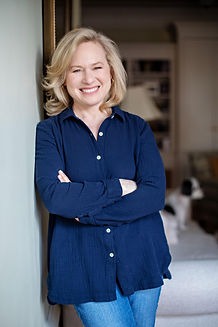
Diane Debrovner is the former deputy editor of Parents magazine and author of the article “What Blind Parents Want You to See,” which became the book Roxie in Color. She helps nonprofits share their stories to raise the funding they need and lives in New York City with her family and a dog who loves watermelon.
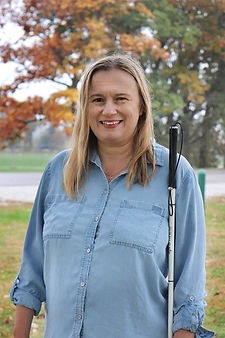
Stacy Cervenka is the director of the Iowa Department for the Blind and previously led the Blind Parents Group of the National Federation of the Blind. Stacy and her husband Greg are both blind and live in Lincoln, Nebraska with their two children who are sighted.