Kids Discover Talks with NY1 Journalist Cheryl Wills About Historic Hidden Passageway on the Underground Railroad Found in New York City
- March 23, 2026
- By Alice Knisley Matthias
New York City was a location on the map for abolitionist advocacy in the years leading up to the Civil War. Abolitionists fought to stop slavery and the city was a part of a network of safe houses called the “Underground Railroad.”
History writers refer to the story of the Underground Railroad as a jigsaw puzzle with many missing pieces lost through the years.
Now, a new piece of this history puzzle has been found!
Kids Discover spoke with Cheryl Wills, Emmy award winning journalist from Spectrum News NY1, about a part of the important historical story of the Underground Railroad that was recently discovered..

Emmy award winning journalist, Spectrum News NY1
The Merchant’s House Museum in New York City is the first landmarked building in Manhattan and it was built in 1832 on East 4th Street by Joseph Brewster who was a noted abolitionist. Brewster was part of a group of people who did the quiet and dangerous work of aiding enslaved people seeking freedom.
Last month the museum had a press conference to confirm what had been reported by NY1 news station. A secret passageway was found hidden within the walls of the historic home which has been open to the public as a museum for the last 90 years. The discovery means the house was probably used as a “safe house” for escaped slaves being transported to freedom along the Underground Railroad.
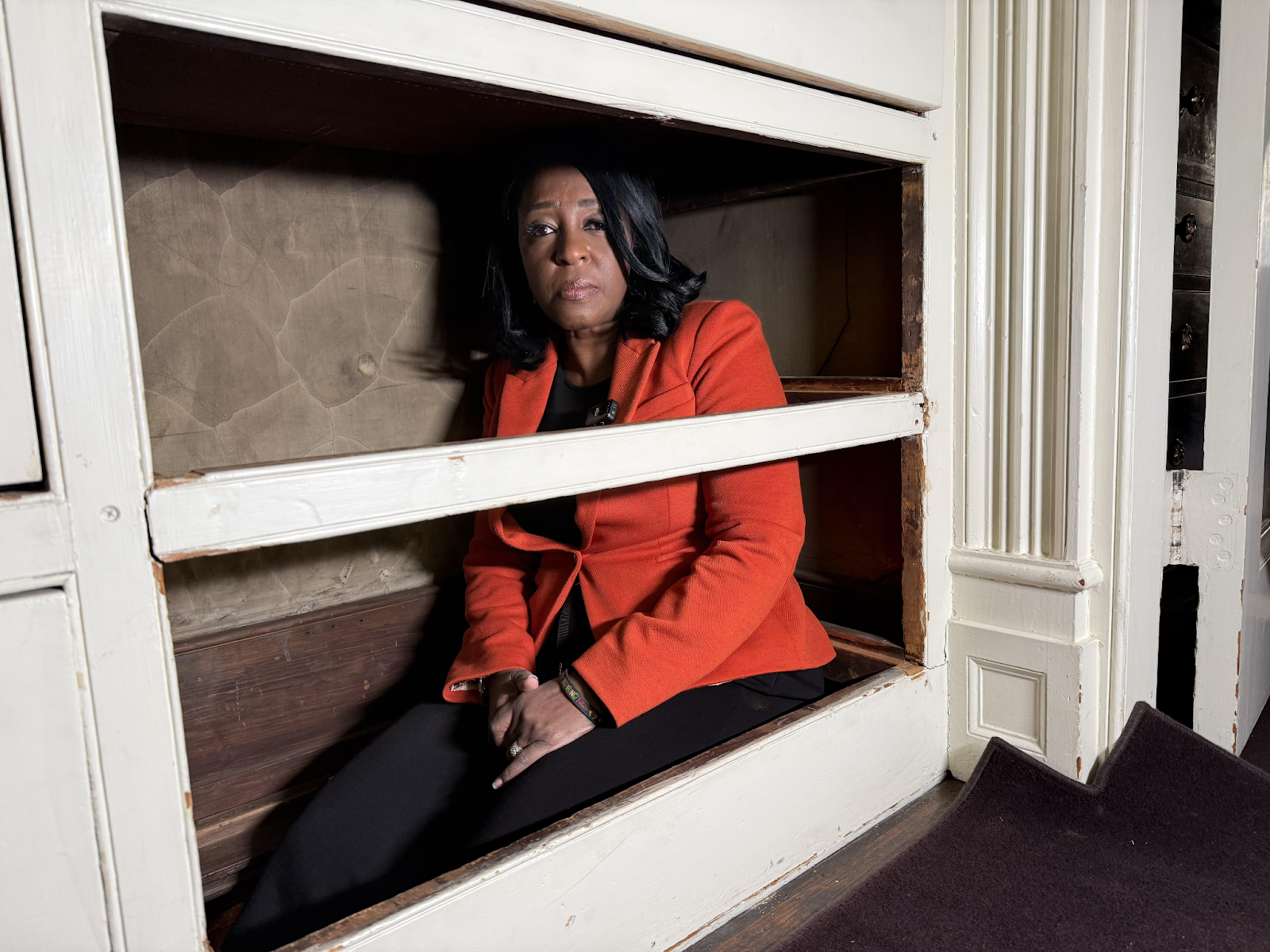
In addition to narrow passageways in the walls, an opening underneath a set of drawers reveals a rectangular cut-out in the floorboards with an enclosed space and ladder leading to the ground floor of the house. The space is only 2-by-2-feet and represents a path to freedom.
“This discovery emphasizes the role New York City played as a hub for abolitionists,” says Wills. “For too long, the narrative of the city’s past has obscured the intensive efforts of local Black AND white abolitionists.”
You can see the video of the report by Cheryl Wills here.
Architectural historians note that being an abolitionist was rare for wealthy white people in New York. Joseph Brewster, as the builder of his house, was able to use design choices to make a secret and safe route for those seeking freedom through the walls of his house. Historians call the layout and design of the secret passageway a “masterwork of deliberate concealment” as an escape route made to be invisible to slave catchers.
“The evidence proves noted abolitionist, Joseph Brewster, despite his social standing and lifestyle, secretly harbored freedom seekers from the south,” says Wills. “And he clearly risked his life to do so!”
Kids Discover talked with Cheryl Wills last year about her great-great-great grandfather who served in The Civil War. The recent discovery of a location on the Underground Railroad in New York City is another example of how history still has many stories to tell us.
“While sitting in this concealed area, I felt the courage of the enslaved individuals risking their lives for freedom and the moral conviction of the abolitionists who risked imprisonment and ruin to help them. As the great-great-great granddaughter of a self-emancipated man from Tennessee who served during The Civil War, these hidden histories serve as a testament to human resilience and sacrifice.”